Location: Honduras
Start Date: 2009
Partners: Asociación Confraternidad Honduras (ACH)
Schooling in most rural Honduran villages ends at Grade 6, usually because parents cannot afford to send their children to junior high school away from home.
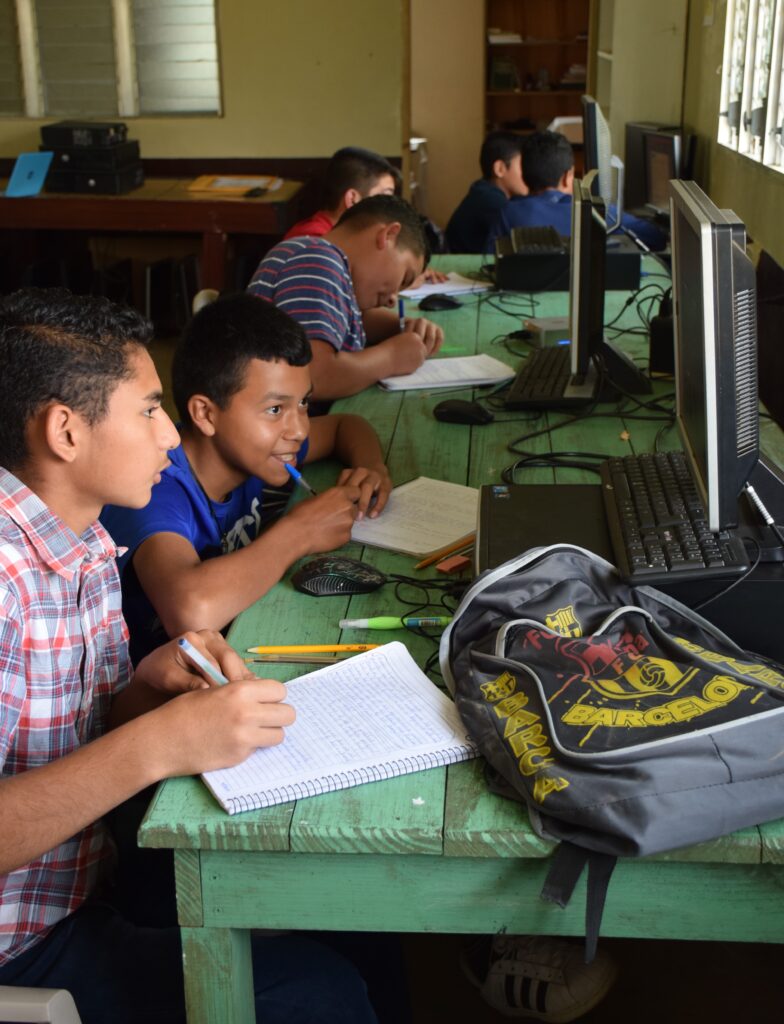
Computer Assisted Learning (CAL) is an inexpensive and effective way of providing basic education in developing countries. A digitized curriculum is installed on computers, which are used by students to learn at their own pace. After completing the curriculum, a student is eligible to take the national exams for graduation to the next grade.
Project Goals
- Remove barriers that prevent children from continuing their education beyond grade 6.
- Provide quality education for Grades 7, 8, and 9 following the Honduran curriculum.
- Provide supplementary materials such as reading materials, reference books and a keyboarding program
Sombrilla’s CAL program for Junior High School in Honduras was started by Canadian Peacemakers International in 2009, and has been administered by our partner organization ACH since 2013. In 2024, the project was transferred from CPI to Sombrilla.
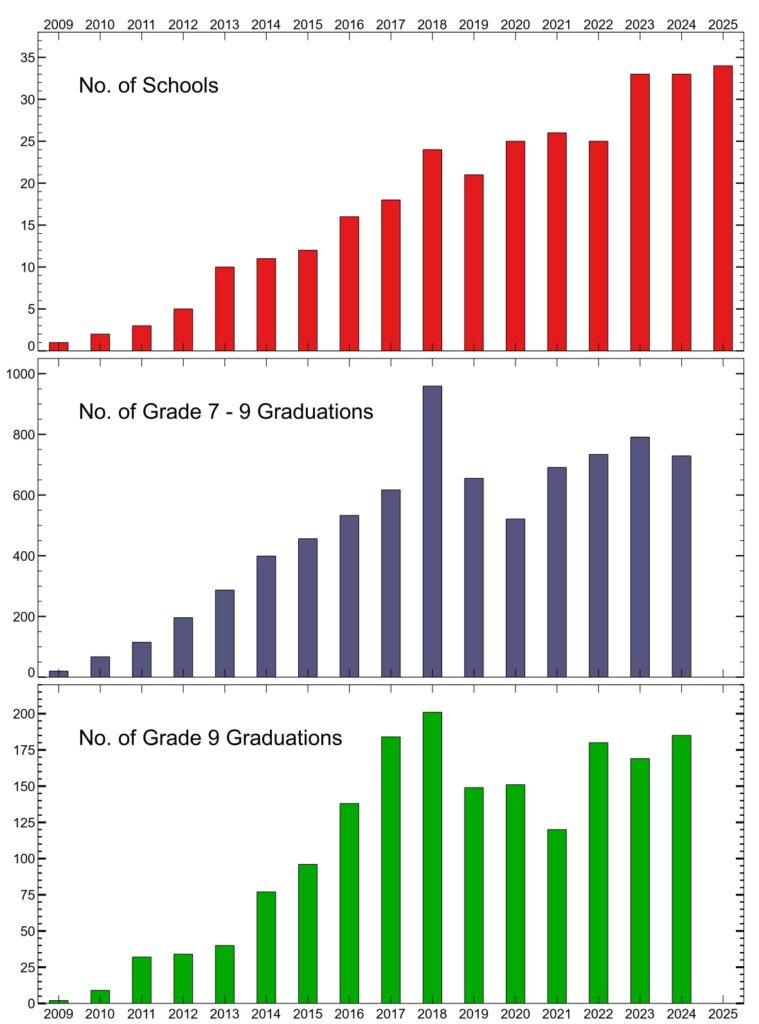
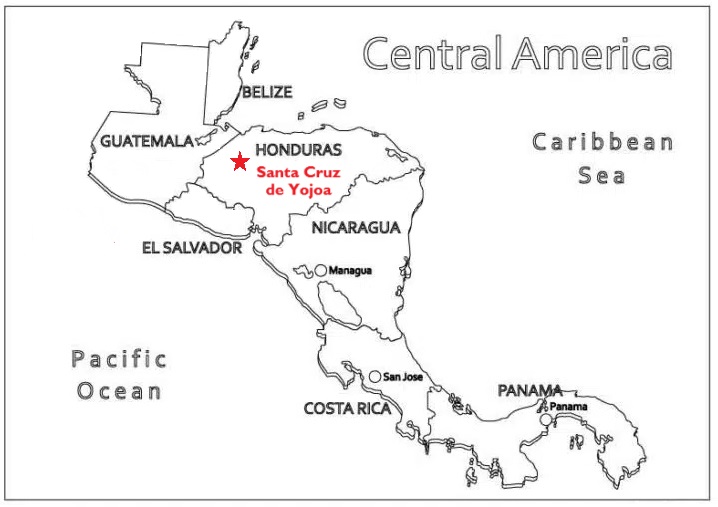
The main campus and administration centre (indicated in red) is located in the town of Santa Cruz de Yojoa, about 80 km south of San Pedro Sula, the country’s second largest city. As of 2025, satellite schools (indicated in yellow) have been established in 33 communities, most of which are in western Honduras. The schools are staffed by technicians who assist students in accessing the curriculum and learning resources on computers.
In addition to the curricula for grades 7,8 and 9, each computer contains:
- A digital library of over 500 titles provides reading materials for students. This library has a deliberate peace bias, with stories that promote peace and conflict resolution without resorting to violence. Many of the stories selected for inclusion in the library have been illustrated by ACH staff. For readers who have had little access to stories, these illustrations make reading more enjoyable.
- Reference books such as a dictionary, the Encyclopedia Encarta and the Encyclopedia of Honduras, an atlas, and the Spanish version of “Where There Is No Doctor: A Village Health Care Handbook.”
- A self-instructional typing/keyboarding program to help students learn to use the keyboard efficiently.
ACH is committed to the philosophy that education should be available to all, even those from the poorest families. The only condition ACH places on students who wish to enroll in the CAL program is that they have completed Grade 6. Barriers to accessing education have been removed by:
- Making attendance voluntary. ACH does not maintain attendance records and students come to study without coercion on the part of the learning centre. A student missing days, weeks, or even dropping out for a period of time, can resume their studies at the place they left off before their absence.
- Limiting fees to a graduation charge of HNL 300 (about CAD 17) at the end of each year to help offset some of the costs of the program. Any student who cannot afford this fee can do community service work in lieu of payment.
- Not requiring a dress code. The cost of uniforms is a common barrier to school attendance in Honduras.
- Having an open admission policy. Students can enroll at any time of the year and are not restricted to a fixed start date.
The main school in Santa Cruz de Yojoa, the Instituto Centro de Enseñanza Fraternidad (CEF), is registered with the Honduran Ministry of Education. This gives the school official status and the right to do certain things with the curriculum and educational delivery. It also gives the CEF the right to award graduation certificates.
Project Impact